Showing posts with label AFI Docs. Show all posts

Monday, July 31, 2017

AFI Docs 2017 - Icarus


The opening night film of AFI Docs 2017 was Icarus. I must say, I was surprised to see them pick a sports film as the opener, but as I learned more about the film, the choice began to make more sense. The film starts out as a sort of Supersize Me on steroids (and I mean literally on steroids). Amateur endurance cyclist Bryan Fogel decides he's going to start doping to show how Lance Armstrong and other athletes have managed to use performance-enhancing drugs undetected, despite a system that tests them frequently to prevent that.

But then Fogel's American specialist decides he doesn't want to risk his reputation by helping Fogel do this and refers him to a Russian specialist, Grigory Rodchenkov, head of the Russian anti-doping lab. The film begins to pivot to be not about Fogel at all.

Rodchenkov is quite the character - he's brilliant, hilarious, a dog-lover, and generally incredibly cheerful. Fogel and Rodchenkov quickly become friends, even visiting each other in their respective countries so that Fogel can give Rodchenkov his pee to create a profile for him that will help Fogel cheat the testing system while doping.

A little ways into their relationship, Rodchenkov casually mentions "have you seen the film about me?" He is referring to a German film that claimed that basically all Russian athletes in the Olympics and other international competitions have been doping for decades and that Rodchenkov is the brains behind the state-sponsored operation.

As those claims get picked up, examined, investigated, etc, the film starts to turn more thriller, and the film becomes a window into the Russian psyche and what they'll do to win - something that has much broader implications for us here in the US right now. Not only that but Rodchenkov begins to suspect his own life may be in danger when Russian officials ask him to resign. Without giving too much away (even though it's real, googleable events), the film from here becomes devoted to keeping Rodchenkov safe and also getting out the truth about the Russian doping situation.

Overall, I enjoyed the film. I will say that I think it's maybe 20 minutes too long, and there were times I was a bored. But Rodchenkov is a wonderful character, and there were also times I was completely riveted. I am not a particularly sports-inclined person, so my personal reaction was essentially "all this just to win some games?" I realize that sports is a multi-billion dollar industry, but that fact itself bothers me when we live in a world where people are starving or dying in conflicts. During the Q&A people kept saying "this is such an important story" and to be perfectly honest, I kept thinking to myself "is it though? There are so many much bigger issues that threaten the lives of millions in this world." To me the only way it's important is as a lens into the lengths Russia will go to achieve their goals. If they'd go this far and game a very detailed system to win some medals, what lengths do you think they've gone to in order to influence America's election? That said, not every documentary has to be really important. Sometimes a film is worth watching because it's an enjoyable story and I would recommend this film for that purpose. I am hoping that they continue to fine tune it before it's released on Netflix though - apparently it's changed a great deal between Sundance and AFI Docs, and I think it could still use some tightening up. But even if not, it's definitely worth watching.

Wednesday, June 21, 2017

AFI Docs - An Inconvenient Sequel


I have to first admit I never did see An Inconvenient Truth, but I'm not someone who needs to be convinced of the urgency of climate change. At AFI Docs this weekend, I did have the privilege of seeing An Inconvenient Sequel, the 10-years-later look at how much more urgent it's become. The film follows Al Gore as he educates people on how to be climate activists all over the world, and then to Paris where we watch the drama of that climate agreement play out. Unfortunately, we Americans are all too aware of the fact that Trump is trying to pull the US out of that climate agreement, a fact which was not in this film but which the filmmakers said would be added to the end of the film before it hits theaters at the end of July.

The film is quite well done. Some of the imagery and information shook me to my very core, and yet the film has a good amount of comic relief and several messages of hope. You'll laugh, you'll cry, you'll have a rage blackout or two... All the feels that good documentaries can cause. But I think, unfortunately, because of the fact Al Gore is the main character, the film will really just be preaching to the choir. I don't think any conservatives are going to watch the film. That said, a strong box office showing can still show public support for this issue. And there are interesting bipartisan moments, like when Al Gore goes to Georgetown, Texas, which will be one of the largest towns in the US using 100% renewable energy very soon, and yet the mayor is Republican, as is probably much of the town. Honestly, someone should probably make a short documentary about that town - that might go a lot farther convincing people on the conservative side that renewable energy is beneficial.

Definitely I recommend seeing the film when it comes out July 28th (select theaters) or August 4th (Nationwide).


Saturday, June 17, 2017

AFI Docs 2017 - Nowhere To Hide


Nowhere To Hide is a film about life in the dangerous "triangle of death" in central Iraq after the US pulls out. It is told from the perspective of Nori Sharif, a nurse in Jalawla. At first the film starts with him sharing the stories of people he knows whose lives were destroyed by the US war. But as Al Qaeda and ISIS begin to cause increasingly more havoc in the area, the story becomes more about how they are stuck in a war they don't really understand, unable to do anything to fix it and then later trying to escape it.

In the beginning, despite the carnage Sharif has already seen, he seems happy. His own family had been lucky to be relatively unaffected. He jokes and laughs. Even some of the people whose lives have been destroyed by the US war still manage to joke and laugh. As the film goes on, the smiles disappear and you can see the toll the war is taking on Sharif. You witness some of the carnage from his perspective, and I cried at multple points in the film. The one glimmer of hope throughout is the children - despite everything going on, the children still find joy is running, playing, dancing, listening to music. Of course they're not unaffected, and you wonder how this desensitization to extreme violence will affect them in the future, but to see the resilience of children is a reminder that the natural state of our spirit is joyful.

I think one of the more interesting things I learned was actually in the Q&A, in which director Zaradasht Ahmed said that at the beginnings the Iraqis were celebrating the arrival of the Americans. I always took that to be American propaganda. But then how from there, we did it all wrong, destabilizing the region and turning the Iraqis against us.

The film is a horrifying personal account of war. It will definitely make any American who supported the Iraq war think a lot harder about what we did over there. And it's also just a really well-told, touching story, particularly since it takes place over the course of several years.

It is a very sad film, but one I wish this film would become required watching for every American. I think it would create a lot more empathy, and make us think a lot harder about entering future conflicts.

Friday, June 16, 2017

AFI Docs 2017 - No Man's Land


I must admit I was a little hesitant to see No Man's Land. The film is about the armed standoff at Malheur National Wildlife Refuge in Oregon, led by the Bundy brothers. Part of me didn't want to give these radicals any more attention than they had already gotten. But I went and saw it anyway, and I'm so very glad I did.

Documentarians tend to be a relatively liberal bunch, myself included, so I was mostly expecting to be angry. At a panel about documentary in service of civil discourse this morning, one of the panelists said, "the best thing I can hear at one of our community events is 'I never thought of it that way before,'" and that's exactly the reaction I had to this film. And part of what attracted me to the documentary field in general was the ability of documentary to help people see others' perspectives, but I still hadn't really ever seen a documentary about conservatives that made me see their side of things before. For example, I loved the film Jesus Camp, but I left it mainly feeling like those people were completely out of touch with reality.

This film was different. In our incredibly polarized society right now, this film showed all sides of the argument equally and fairly. Their access was amazing. And what struck me the most were the number of things I had in common with the militiamen. For example, some of the issues that come up that some of the characters oppose are things like the Patriot Act and the militarization of the police force, things every liberal I know is against. These men feel their way of living is being taken away - a feeling most people I know in the cities share, albeit in different ways. And while I don't think fear of change is productive, most Americans agree that things are changing primarily for the worse: there aren't enough jobs, wages suck, we're running out of options, and people are angry. This is a feeling it seems most Americans share right now.

When it comes down to it, these people want what is best for their families. They want to do more than survive, they want to thrive. And even survival feels increasingly difficult for many Americans right now. That feeling that the government isn't listening to the people anymore is something most Americans can relate to and the desire for drastic action to get them pay attention rumbles within many of us. What we differ on is how to achieve this, and that's where it does start to feel a little hard to stomach. I fully believe in peaceful approaches. I'm a strong advocate of gun control, and I think any militia that thinks even their automatic weapons can stand up against the government's drones, tanks, missiles, etc, seems naive at best to me. Situations with weapons involved can escalate unnecessarily, as it did in this standoff, which led to one of the leaders of the militia getting killed. People in the nearby towns were scared. They felt like they were being bullied, which is ironic because on of the militia leaders later says (without irony) to the camera something to the effect of "the government can't come in here and bully and intimidate people with weapons."

Anyway, the point is, this is a riveting film, and one that is incredibly fair to everyone involved. Every character is treated with respect. There are some really great insights from both sides. And it shows how truly complex this situation was. It really made me think and it inspired me to try to find the commonalities I have with people on the other side of the political spectrum, which is something I think we all should be doing if we're going to keep American democracy in tact. I definitely recommend the film.

Sunday, June 21, 2015

AFI Docs 2015 - The Wrap Up

So AFI Docs is over but they are re-playing some festival favorites today. Best of Enemies was great but by the time this post goes live, that screening will have already started. So I will just highly recommend that you go see Radical Grace tonight at 5:15pm. Full review of that film is below.

The Russian Woodpecker

This film was definitely one of those stranger-than-fiction kind of documentaries. It's about a Ukranian artist who investigates a conspiracy theory about the Chernobyl explosion. Part investigative journalism, part experimental art piece, it's a pretty unique film. The artist is a very interesting character, the lack of trust amongst everyone that is participating in the film is very interesting, and it was beautifully shot. It gives a fairly good background on the situation and Ukraine/Russia/Soviet history, some of which is extremely interesting (ie the Russian Woodpecker signal that the film is named after). But I felt a little mislead as to what I was expecting. I was sort of expecting a gripping mystery a la Resurrect Dead: The Mystery of the Toynbee Tiles and it wasn't quite that. It felt a little disorganized / jumping about at some points, probably because they're trying to cover so much history and such a complex political situation while also addressing this conspiracy theory. Overall, I would say watch the film. In talking with various people about it, it seems people who didn't have much in the way of expectations really enjoyed it, but a few of us who had certain expectations based on what we read or saw about the film found ourselves a little disappointed.

Requiem for the American Dream

I fell asleep. And let me reiterate that until a certain film at Full Frame a few months ago, I had literally never fallen asleep in a movie theater (or even watching a movie at home) in my life. It doesn't take much when it comes to video to keep me awake, even if I'm not really interested. The visual and auditory stimulus alone is usually enough. But this film was 75 minutes of Noam Chomsky droning on, with b-roll and motion graphics to cover it so that it's not just a talking head the whole time. Now, I love everything Noam Chomsky was saying and a lot of it was so important. But presented in that way, as basically a 75 minute lecture, was just not the right way to go. They should've broken it down into 10 web shorts (most of the film addresses "10 principles"). That could've been a really interesting web series. As a feature, not so much...

How to Dance in Ohio

How to Dance in Ohio is a charming film about teens and young adults on the high-functioning end of the autism spectrum learning social skills, particularly in preparation for a formal dance. You really get a sense of the struggles that kids on the spectrum and their family go through, and you admire their perseverance as these kids who struggle with basic life skills try to learn to live more independently. You will laugh, you will cry, and you will learn a lot about autism. A friend of mine said he saw so much of his grandson, who has aspergers, in these characters, and he thought it was a moving and accurate depiction of what these kids and their families go through.

Most Likely To Succeed

After the abomination that was Requiem for the American Dream, I was a little worried that this film was going to be a feature-length lecture on our education system in the U.S. But I was very relieved that it wasn't. The film is interesting, funny, and well-done. Most of all, it's really really really important. After discussing in depth how our current system is outdated and not preparing students for today's workforce, it primarily focuses on an alternative public high school called High Tech High in San Diego. To even try to explain the model of this school is long and complicated so I'll just say "see the film." There were times when they briefly examined other schools/teachers changing curriculum in revolutionary ways, but I almost didn't like that because it felt like it incongruous to the overall story of High Tech High. I think they filmed at a TON of schools and ended up picking High Tech High to focus on after the fact, and that's sort of what it felt like whenever they switched to other schools. Although I did love the scene at a different school where the top straight-A, high strung, get-into-Harvard type students didn't care about learning in a better way, they just wanted to make sure they could ace the standardized tests to get into the best colleges. I guess that's the catch-22 of the system - you can't really change the model that lower schools are built on until the college admissions process changes. But luckily that's starting to happen a little. And coincidentally there is a statistic at the end of the movie that says 98% of High Tech High kids went to college. Definitely a must-see!

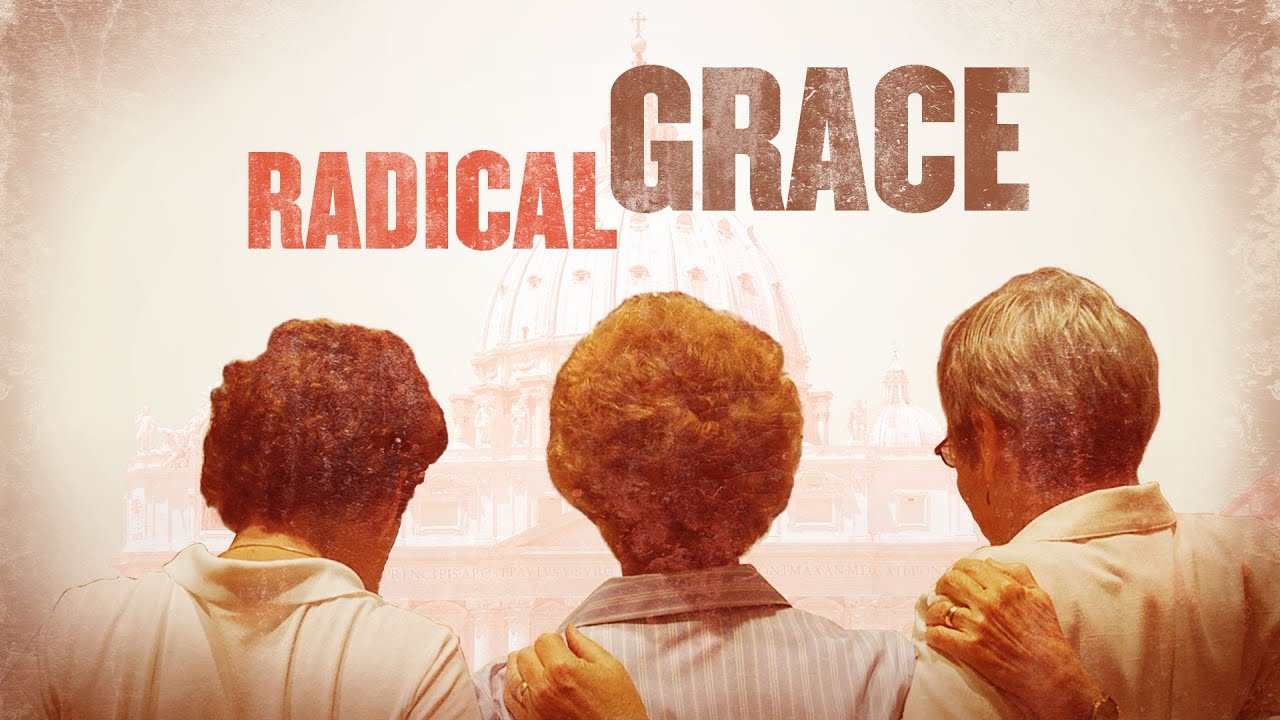
Radical Grace

This film was an utter delight. Radical Grace is about activist nuns, women religious who are actually doing Christian social justice works similar to those of Jesus instead of being hypocrites like many Christians, and the persecution they faced because of it. They were censured by the Catholic Church and investigated for 6 years. Then there was the guy who said that these nuns, for doing social justice work, are worse than pedophile priests... Yikes! But the nuns in the film are an inspiration - they're sassy, kind, fun, HILARIOUS, and incredibly hard-working. Again, you will laugh, you will cry. You will be incredibly moved by the visible impact they're having on people in the film. It was such a relief for me to see religious people practicing the values they claim to uphold, and it gives me hope that religion can be a vehicle for good instead of just a vehicle for hatred, greed, separatism, and violence. Catch an encore screening of it tonight at 5:15pm at the AFI Silver!

Saturday, June 20, 2015

AFI Docs 2015 - Shorts

I finally went to a shorts program! I always mean to but inevitably never do because I'm drawn to features that conflict with it. At Full Frame, though, I had heard such wonderful things about Giovanni and the Water Ballet that I finally made it a priority. I attended the water-themed shorts program.


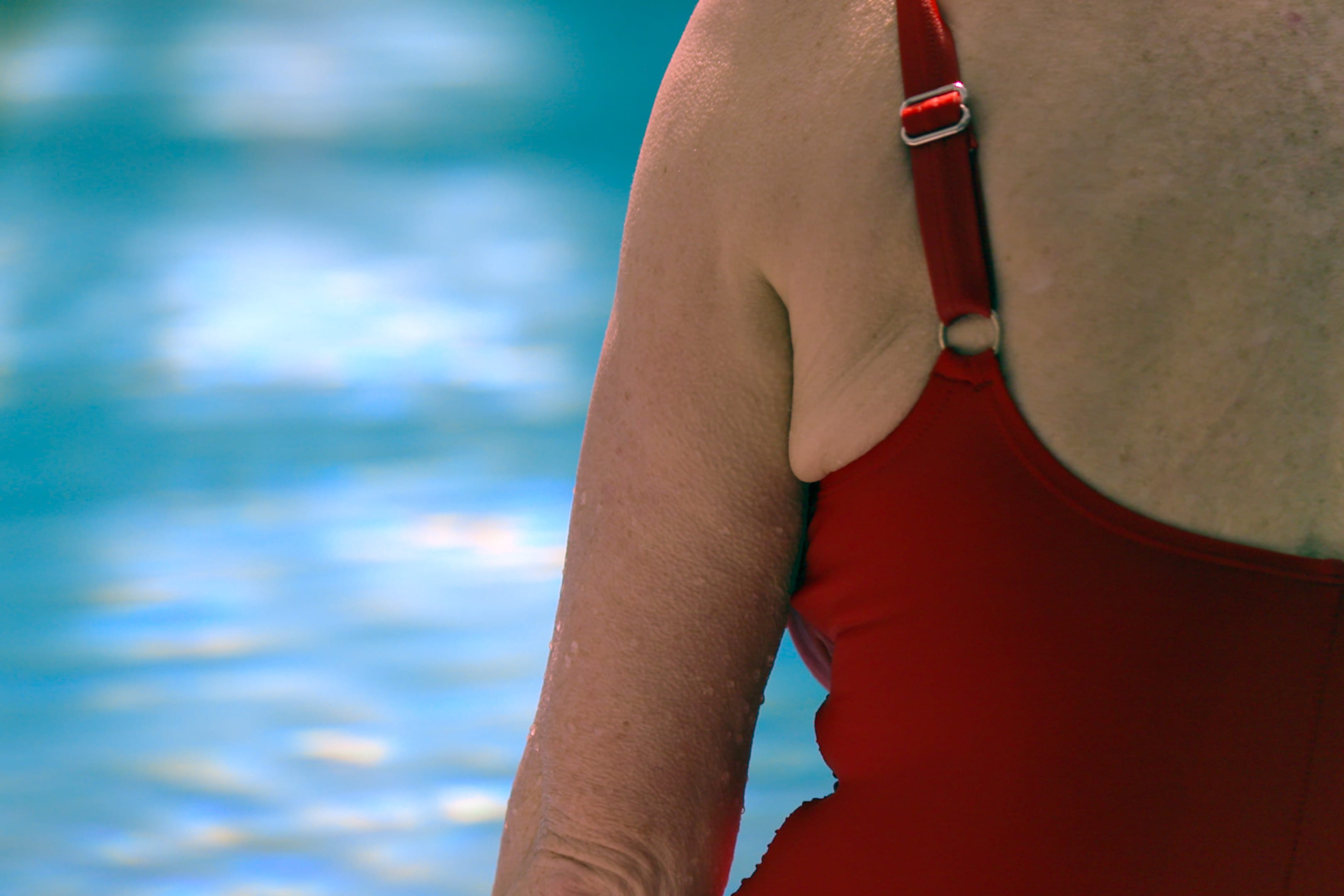
The first film was Waterlillies, which is about older Irish women learning how to swim for the first time. It was very endearing, the women are very funny, and you are happy for them that they are doing this sort of empowering thing for themselves. The underwater, slow-motion photography was beautiful. That said, as I find with many shorts, it was too long. I think it could've been just as delightful at less than 10 minutes, as opposed to the 16 minutes that it was.


The second film was Object, which I hated. It is very abstract, yet the subject matter isn't all that abstract. The essential goal of the film is to put you in the position of a rescue diver in a frozen lake in Poland. While I did get a sense of the anxiety and danger, I did not know they were rescue divers. Especially based on the title, I thought perhaps they were some kind of underwater archeologists. But apparently, in Poland, rescuers refer to bodies of missing persons that they are looking for as "objects." When you do finally see a body, it's so brief that I wasn't totally clear that I was seeing a body. It's in one brief shot in which it's just a silhouette in murky waters and then it's in another shot in the reflection of the diver's mask. I honestly thought maybe it was a statue at first, since I thought they were looking for objects, and then even when I was pretty sure it was a body, I was unclear as to why he came up without it (apparently they're not allowed to actually remove them from the water...?). It was also way too long. A more traditional documentary about rescue divers, in which you really get a sense of the trials and tribulations, including probably the emotional toll of finding dead bodies, would be really interesting. But I was just bored and confused by this film and it felt like it was being experimental and slow for the sake of it and because it's trendy right now.


Giovanni and the Water Ballet was the third film and it was every bit as delightful as I hoped it would be. It's about a young dutch boy who wants to be on a synchronized swimming team. In order to do so, he must pass an exam and from there, his ultimate dream is to be the first boy to perform in the national synchronized swimming championships. The film ventures outside of the pool quite a bit, and also examines his relationship with his very supportive "girlfriend" (it's very innocent - they haven't even kissed). While the swimming was certainly impressive and entertaining, these scenes with his girlfriend were, for me, the most delightful parts of the film, as the two are hilarious and adorable.


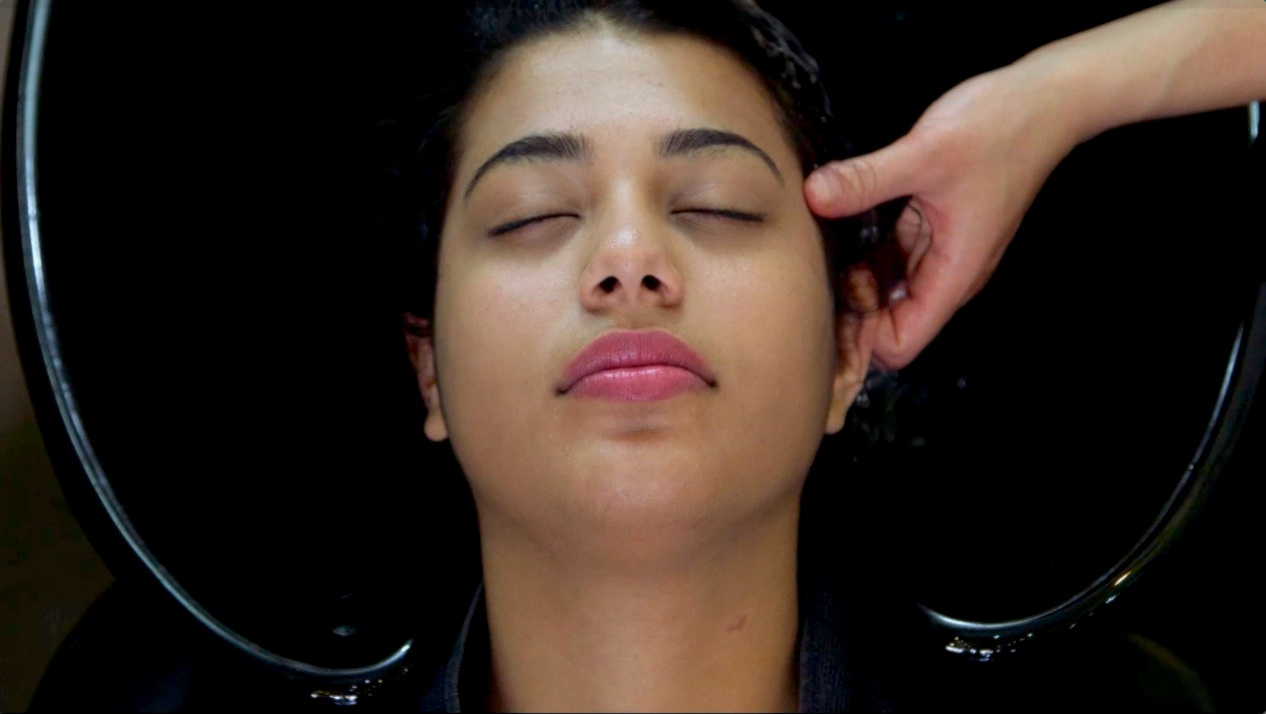
The last film was Women in Sink, which was an interesting piece about Jewish-Arab relations in Haifa in Israel, as told through conversations with women as their hair was being washed by the filmmaker in a salon. The filmmaker started out with an agenda to show that Arabs are mistreated but instead got a dose of hope, as most women seemed to say that, at least in Haifa, it wasn't so bad. The filmmaker did a great job of getting these women to open up on camera. The only thing I didn't love was that it really was just a static shot from above of the women's faces while their hair is being washed and their chatting. In between, there these lovely, brief moments of shots of the salon, and I wish they had shown more of the salon life rather than having it be so talking-head-heavy, especially since it clocked in at 36 minutes. That's a lot of talking heads, and while the subject matter is certainly interesting and made it feel less long than it was, it would've been nice to have a little more visual substance.

Friday, June 19, 2015

AFI Docs 2015 - Day 2

Ok, I have to say it: I officially miss Silverdocs. I may have expressed this feeling before but the last few years I've only been able to attend opening night just because I was too busy at work, so I hadn't actually really experienced the change yet. The name change and the shift to an emphasis on politics don't bother me. What bothers me is how spread out the festival is now. It used to be so easy to get from film to film to film and have such a strong sense of community. Now, not only is there virtually no sense of community, I find myself choosing films largely based on geography rather than what I really want to see, and only seeing 2 films in a day because I just can't go back and forth between the city and Silver Spring.

I realize no one is asking for my advice, but I'm going to give it anyway: Have the opening night and closing films at fancy venues in the city to maintain the glitz and glamor that the new festival seems to be trying to embody, and do your event at the white house and maybe one by the capital or something for the politically-related events, and then do the rest in Silver Spring. And bring the conference back to the way it used to be (and in Silver Spring), because the old conference portions for the years I was privileged enough to go were invaluable.


Ok, moving on to the actual films. On Day 2, my first film was Frame by Frame. It had such potential to be a great, important film. But it did not live up to that potential. The film is about photojournalists in Afghanistan. Photos, having been outlawed by the Taliban, are a new medium to most Afghans, and it's incredibly important that they have native photojournalists to tell the story of Afghanistan so that all the perspectives are not that of outsiders, but of people who understand the country and can give Afghans a voice. Of course the characters and subject matter are compelling, but the film dragged in many spots and I didn't feel as much of a sense of urgency about the issue as I think I should've felt. And it didn't seem to me that the issues these characters faced were different from the issues foreign journalists in Afghanistan also face: the very real threat of physical violence from terrorists, not being allowed to photograph certain subjects (particularly related to women), etc. So the particular angle that is supposed to make this film different (that it is specifically about Afghan journalists), didn't really make it that different from any other film about conflict photographers. The other thing that I found sort of unfortunate is that a film that is all about giving Afghans a voice to show outsiders what the real Afghanistan is like was made by two outsider (white) women... Of course, the photography was beautiful, and I think seeing the photographers' work was actually one of my favorite things about the film. But overall, I really didn't feel like this film lived up to my expectations.


From This Day Forward is a touching story about an adult man who, while married and the father of two children, decides to make the transition to living as a woman. It is told by her daughter, now an adult, trying to process everything that she sort of intentionally didn't process as a child. I was filled with awe and admiration for this family, particularly for their mother, who stayed with her spouse through this. The complexity of the situation is captured in a lovely, intimate way and I really felt like I gained an understanding for everyone's viewpoint and can relate to all the characters and what they went through, despite having never been in a remotely similar situation. I felt the pacing could be improved in some spots, but that might not be totally fair since Best of Enemies the night before gave me such high standards for pacing. But overall it was a lovely film, and I definitely hope a lot of people will watch it to help bring greater understanding and empathy for transgender people and their loved ones everywhere.

Thursday, June 18, 2015

AFI Docs 2015 - Best of Enemies


AFI Docs 2015 started out strong on opening night with the historical documentary Best of Enemies, about the 1968 televised debates between arch enemies William F. Buckley, Jr. and Gore Vidal.

The film was perfectly-crafted. It was riveting, funny, tense, sad, and above all, poignant. Having been born in the 80s, I was not alive during the debates and so I went in knowing very little about them, or even about either of the debaters, though I was ever so slightly more familiar with Vidal than with Buckley. But the film did a great job of giving viewers a background into who both of them were, what was going on in the larger context of politics/the US at the time, and how these debates, despite living up to a higher standard of intellect than current pundit television, were pretty much the starting point on the path to the terrible, divisive pundit television we have now.


I will also say that it was some of the best editing I have seen in a long time. It was very well-paced. Nothing felt too long or like they skipped anything important. Honestly, it set the bar so high for the pacing of a film that it has made me hyper-aware of the pacing flaws, however minor, in almost all of the other films I've seen at the festival.

And while I'm not actually the most fond of the theater at the Newseum (if you get stuck under the balconies in certain spots, the balconies actually block parts of the screen! Who designed that?!), in this case, I don't think a more perfect venue exists for the subject matter, being a story about both politics and journalism.